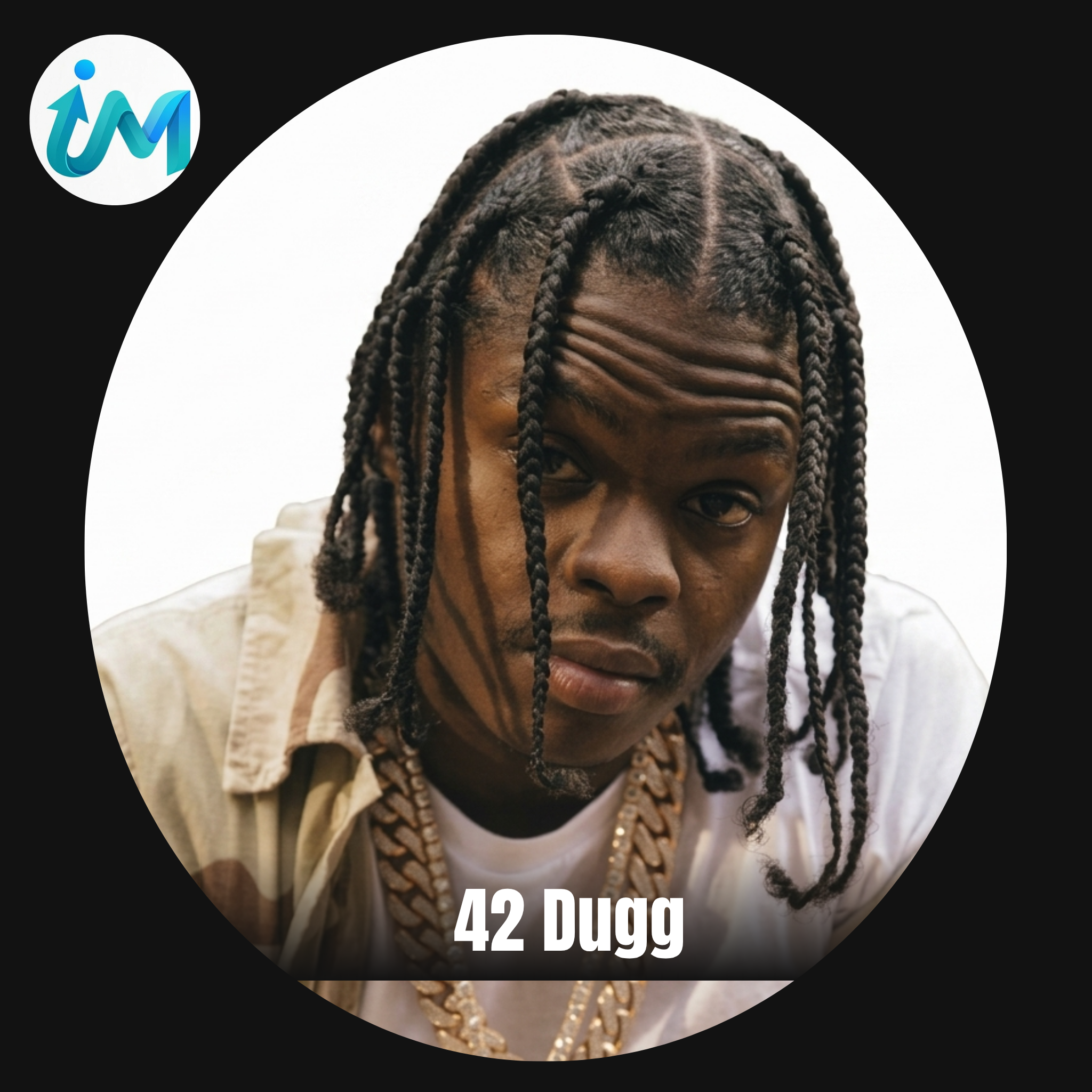
42 Dugg has become one of the more recognizable names in modern Detroit rap, known for his sharp delivery, compressed flow, and frequent collaborations with major artists in the industry. Born Dion Marquise Hayes, his journey reflects a mix of early hardship, street experience, and rapid success in mainstream hip-hop. What makes his story stand out is not just the music, but the way his career has moved between breakout moments and unexpected setbacks.
From Detroit’s East Side to Billboard chart appearances, 42 Dugg represents a generation of artists who turned regional sound into national attention. His rise was not gradual in the traditional sense; instead, it came in bursts through collaborations, viral tracks, and strong industry backing.
Early Life in Detroit and Background
42 Dugg was born on November 25, 1994, in Detroit, Michigan. Growing up on the East Side, he was exposed early to an environment shaped by economic struggle and street influence. That upbringing later became a central theme in his lyrics, where he often reflects on survival, loyalty, and consequences.
His stage name is widely linked to the area he grew up in, specifically the intersection of 4th and 2nd streets, a detail that connects his identity directly to his neighborhood. This connection is important because Detroit rap culture often emphasizes authenticity and local representation, and 42 Dugg has consistently leaned into that identity.
During his teenage years, he spent time in juvenile detention, an experience that influenced both his outlook and his decision to take music more seriously later on. While many artists begin recording in studios early, his path was different, shaped by limited opportunities and legal challenges that interrupted his early adulthood.
Entry into Music and Early Breakthrough
42 Dugg’s serious entry into music began after his release from early incarceration. He started recording and releasing tracks independently, gradually building attention within Detroit’s underground rap scene. One of his earliest notable efforts was “Mama I’m Sorry,” a track that reflected personal regret and life experiences rather than commercial ambition.
His early music carried a raw and unfiltered tone. Instead of polished production, the focus was on storytelling and emotion, which helped him connect with listeners familiar with similar environments. Over time, this style evolved into a more structured and melodic approach, but the foundation remained rooted in street realism.
A major turning point came when he began connecting with established figures in hip-hop. His networking within Detroit and Atlanta circles eventually led to industry interest, setting the stage for a breakthrough that would come through collaboration rather than solo dominance.
42 Dugg Breakthrough Success and Mainstream Recognition
The defining moment in 42 Dugg’s career arrived through his collaboration with Lil Baby. Appearing on tracks like “Grace” and later “We Paid,” he gained national attention almost overnight. “We Paid” in particular became a breakout hit, entering major music charts and establishing him as a rising voice in rap.
What made this success notable was how naturally his style fit into the track’s energy. His voice, often described as tight and controlled, combined with Lil Baby’s flow in a way that felt seamless rather than forced. This helped him reach audiences far beyond Detroit for the first time.
Following this success, he released “Young & Turnt, Vol. 2,” which solidified his presence as more than just a featured artist. The project showed that he could carry full records while maintaining the same energy that made his features successful. At this point, industry attention increased significantly, and his name became a regular fixture in mainstream rap discussions.
Music Style and Artistic Identity
42 Dugg’s style is often recognized for its minimalist flow, short vocal phrasing, and heavy use of ad-libs. Rather than complex lyricism, his music focuses on rhythm, emotion, and repetition, which makes it highly accessible for streaming audiences.
His sound is closely associated with the modern Detroit rap wave, which emphasizes sharp beats, fast pacing, and street-focused storytelling. However, he also incorporates elements of Atlanta trap influence, largely due to his collaborations with artists connected to that scene.
Over time, his delivery has become more refined. Earlier tracks leaned heavily on raw expression, while newer releases show more control in pacing and structure. This evolution reflects his growing experience in the industry and exposure to larger production teams.
42 Dugg Legal Issues and Career Interruptions
Alongside his music career, 42 Dugg’s life has been shaped by ongoing legal challenges. These issues have repeatedly interrupted his momentum at key moments.
He has faced multiple legal incidents, including probation violations and firearm-related charges. One widely reported case involved a shooting range incident that led to legal consequences tied to prior felony restrictions. Later, he was also involved in a police chase incident that resulted in additional charges related to fleeing law enforcement.
These events created periods where his music releases and public appearances slowed down. At several points, time spent in custody or under legal restrictions limited his ability to tour, record, or promote new projects. Despite this, his music continued to perform well during releases, showing that his audience remained engaged even during absences.
42 Dugg Collaborations and Industry Position
A key factor in 42 Dugg’s success is his network within the rap industry. His most important collaborations have been with Lil Baby and artists connected to CMG (Collective Music Group) under Yo Gotti. These relationships helped him transition from regional recognition to national visibility.
He has also worked closely with EST Gee, another artist known for a similar gritty delivery style. Their joint project, Last Ones Left, highlighted how Detroit and Kentucky rap influences can blend into a cohesive sound.
These collaborations are not just features; they have played a structural role in his career. They allowed him to remain visible during periods when solo output slowed, ensuring his name stayed active in streaming and chart discussions.
Recent Work and Current Direction
In recent years, 42 Dugg has continued releasing music while balancing personal and legal developments. His project “4eva Us Neva Them” reflects a more reflective tone compared to earlier work. The production is more controlled, and the lyrics show signs of maturity shaped by experience.
Rather than drastically changing his style, he has refined it. The core elements remain the same—short flows, emotional delivery, and street-focused themes—but the execution feels more deliberate. This suggests an artist focused on consistency rather than reinvention.
His current position in rap is stable but evolving. He is no longer just a breakout feature artist, but he is also still shaping his identity as a long-term solo performer.
Public Image and Cultural Impact
Public perception of 42 Dugg is shaped by two contrasting narratives. On one hand, he is seen as a key figure in Detroit’s modern rap movement, helping push the city’s sound into mainstream music culture. On the other hand, his legal issues often dominate media coverage surrounding him.
This dual identity has made him a consistently discussed figure in hip-hop. His music resonates strongly with listeners who connect with his background, while critics often focus on the instability that has affected his career trajectory.
Despite this, his influence is clear. He represents a generation of Detroit artists who moved from local recognition to national charts without compromising their regional sound.
Conclusion
42 Dugg’s career is defined by movement between breakthrough success and personal setbacks. His music captures the rhythm of Detroit street life while also adapting to the demands of mainstream hip-hop. What makes his journey compelling is not just his hits, but the tension between progress and interruption that continues to shape his path.
As his catalog grows and his experience deepens, he remains an important voice in Detroit rap and a figure whose next chapter still carries uncertainty and potential in equal measure.