Kevin Corbishley is one of those names most viewers only notice when the credits roll. It appears briefly at the end of BBC productions like Ghosts and Call the Midwife, usually as part of a dedication rather than a cast list. That small moment has led many people to search his name, trying to understand who he was and why his contribution was honoured on screen.
What they discover is not a celebrity story, but something far more representative of how television actually works. Kevin Corbishley was part of the technical backbone of British television, working behind the camera in lighting and rigging departments. His career reflects the hundreds of professionals whose names rarely reach headlines but whose work defines what audiences ultimately see.
The unseen foundation of television production
Every television scene depends on more than actors and scripts. Before a single frame is filmed, lighting crews and rigging specialists shape the physical environment of production. Kevin Corbishley worked within this world, where precision matters more than visibility.
Lighting riggers are responsible for installing and securing the equipment that controls how a set is lit. This includes overhead rigs, support structures, and safety systems that allow lighting designers and camera teams to achieve the desired visual tone. It is highly technical work, often carried out in challenging environments and under strict time constraints.
Corbishley’s professional background placed him in these essential departments across multiple productions. While audiences may never see this layer of work, it directly affects how every scene appears on screen, from the softness of indoor lighting to the dramatic contrast of nighttime sequences.
Work on Call the Midwife
One of the productions most closely associated with Kevin Corbishley is the long-running BBC drama Call the Midwife. The series is known for its detailed recreation of post-war London and its careful attention to atmosphere and period authenticity.
Behind that authenticity is a large technical team responsible for building and maintaining the visual world of the show. Corbishley worked within the rigging and lighting departments that support this process. His role contributed to ensuring that sets were properly prepared for filming, with lighting setups that matched the show’s cinematic tone.
Following his passing, Call the Midwife included a dedication to him in its closing credits. This type of tribute is not added lightly. In television production, on-screen dedications are typically reserved for crew members who were part of the working family behind a series. It reflects both professional respect and personal loss within the production team.
His connection to Ghosts
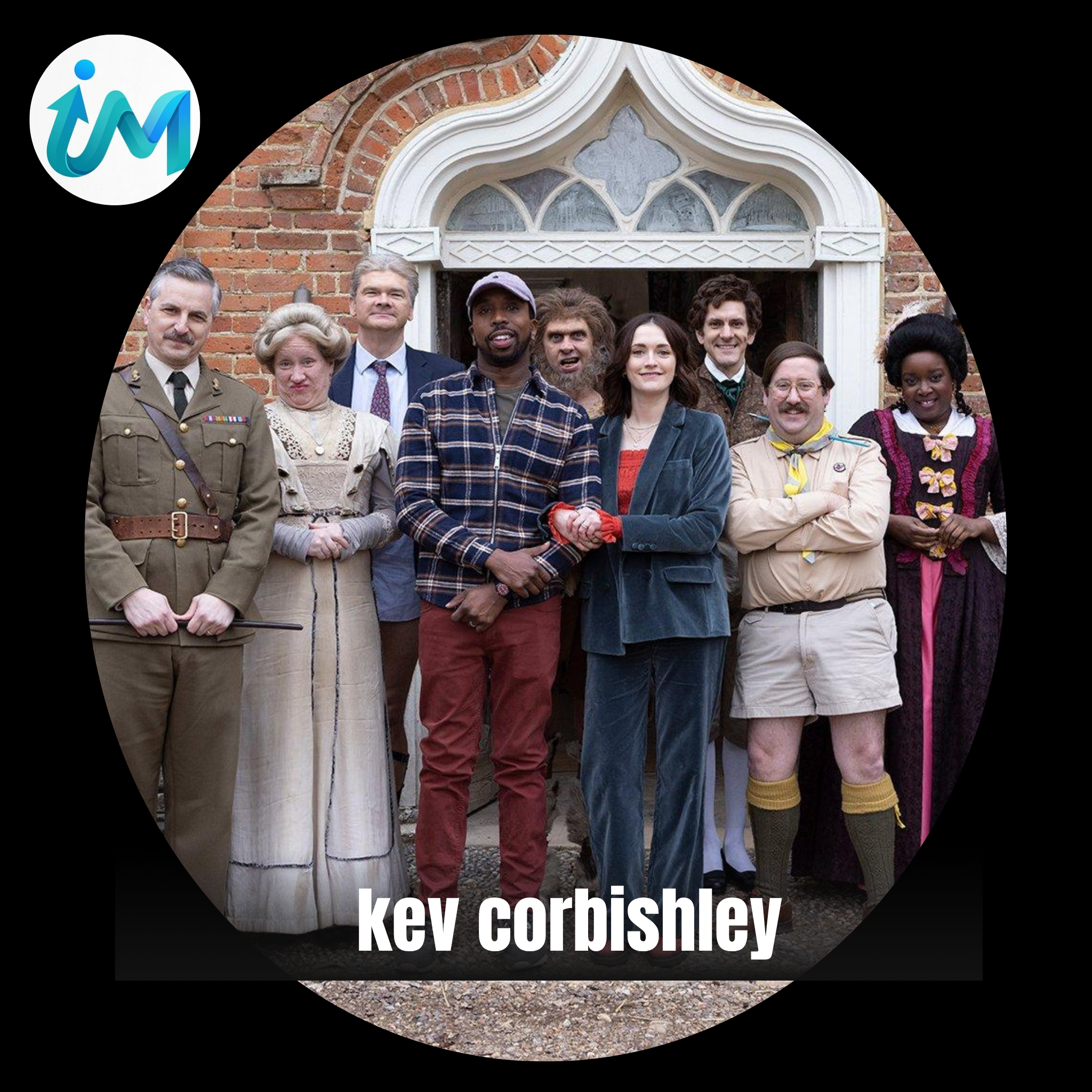
Kevin Corbishley also worked on the BBC comedy Ghosts, another production known for its strong ensemble crew and distinctive visual identity. The show relies heavily on lighting design to balance its historic setting with modern comedic pacing, making the lighting department a central part of its storytelling style.
After his death in 2022, Ghosts included a dedication in the opening episode of its fourth series. The message read as a simple but heartfelt tribute to a colleague remembered by the production team. Moments like this are significant in television culture, where long-running series often become close-knit working environments.
Crew members frequently move between departments and productions, building relationships over years of shared work. Corbishley’s inclusion in the tribute suggests he was not only respected professionally but also valued personally by those he worked alongside.
A career defined by craft, not visibility
Television often focuses attention on actors, writers, and directors, but the reality of production is far more layered. Kevin Corbishley’s work belonged to a category of craft that operates outside the spotlight but holds everything together.
Lighting and rigging teams are responsible for ensuring that every visual element is possible before filming begins. They solve practical problems that most viewers never consider, such as how to safely suspend heavy lighting equipment or how to achieve consistent lighting across different shooting days and locations.
This kind of work requires technical skill, patience, and constant collaboration with multiple departments. It is not glamorous, but it is fundamental. Without it, even the most well-written television drama would not reach the screen in its intended form.
Why viewers notice his name
The reason Kevin Corbishley’s name stands out to viewers is because it appears in moments of tribute. When a name is shown at the end of a program, it interrupts the usual rhythm of credits and invites attention. People pause, search, and try to understand the story behind it.
In Corbishley’s case, that search leads to the discovery of a behind-the-scenes professional whose life was closely tied to the productions he worked on. While public information about his personal life remains limited, what is clear is his consistent involvement in respected British television series and the recognition he received from those productions after his passing.
The importance of crew recognition
Tributes like the ones seen in Ghosts and Call the Midwife highlight an important truth about television production. Every show is built on collaboration, and the loss of any team member is felt across departments.
Crew recognition in credits is more than a formality. It reflects the working relationships that develop over long production schedules, where teams often spend months or years together. In that environment, technical crew members like Corbishley become an essential part of the production’s daily life.
These acknowledgements also remind audiences that television is not created in isolation. It is the result of coordinated effort across lighting, sound, camera, design, and countless other roles that rarely receive public attention.
A legacy in the background of British television
Kevin Corbishley’s legacy is not defined by public appearances or interviews, but by the environments he helped build. His work in lighting and rigging supported the visual identity of productions that reached millions of viewers.
While most audiences will never know the details of his contributions, they experience the results every time they watch a scene lit with precision, depth, and mood. That is often the nature of technical work in television: invisible, but essential.
His name appearing in credits ensures that his contribution is not completely unseen. It stands as a quiet acknowledgment that behind every finished episode is a network of skilled professionals whose work shapes the final image.
Frequently Asked Questions
Who was Kevin Corbishley?
Kevin Corbishley was a British television crew member who worked in lighting and rigging departments on productions including Ghosts and Call the Midwife.
Was Kevin Corbishley an actor?
No, he was not an actor. He worked behind the scenes in technical roles that supported filming and production.
Why was Kevin Corbishley credited in Ghosts?
He was honoured with a tribute in Ghosts after his death in 2022, recognising his contribution as part of the production crew.
What did Kevin Corbishley do on Call the Midwife?
He worked in lighting and rigging support roles, helping prepare technical setups for filming.
Why are crew members given on-screen tributes?
On-screen tributes are used to honour production members who contributed significantly to a show and were part of the working team.
When did Kevin Corbishley pass away?
He passed away in 2022, though detailed personal information has not been widely made public.
Conclusion
Kevin Corbishley’s story is a reminder that television is built on far more than what appears on screen. His work in lighting and rigging helped shape the visual language of major BBC productions, even if most viewers never saw his name during the broadcast.
The tributes shown in Ghosts and Call the Midwife reflect the respect he earned from colleagues who worked alongside him. In an industry built on collaboration, those acknowledgements carry real meaning.
His legacy lives quietly in the shows he helped bring to life, in the light of every scene, and in the unseen craftsmanship that holds television together.